
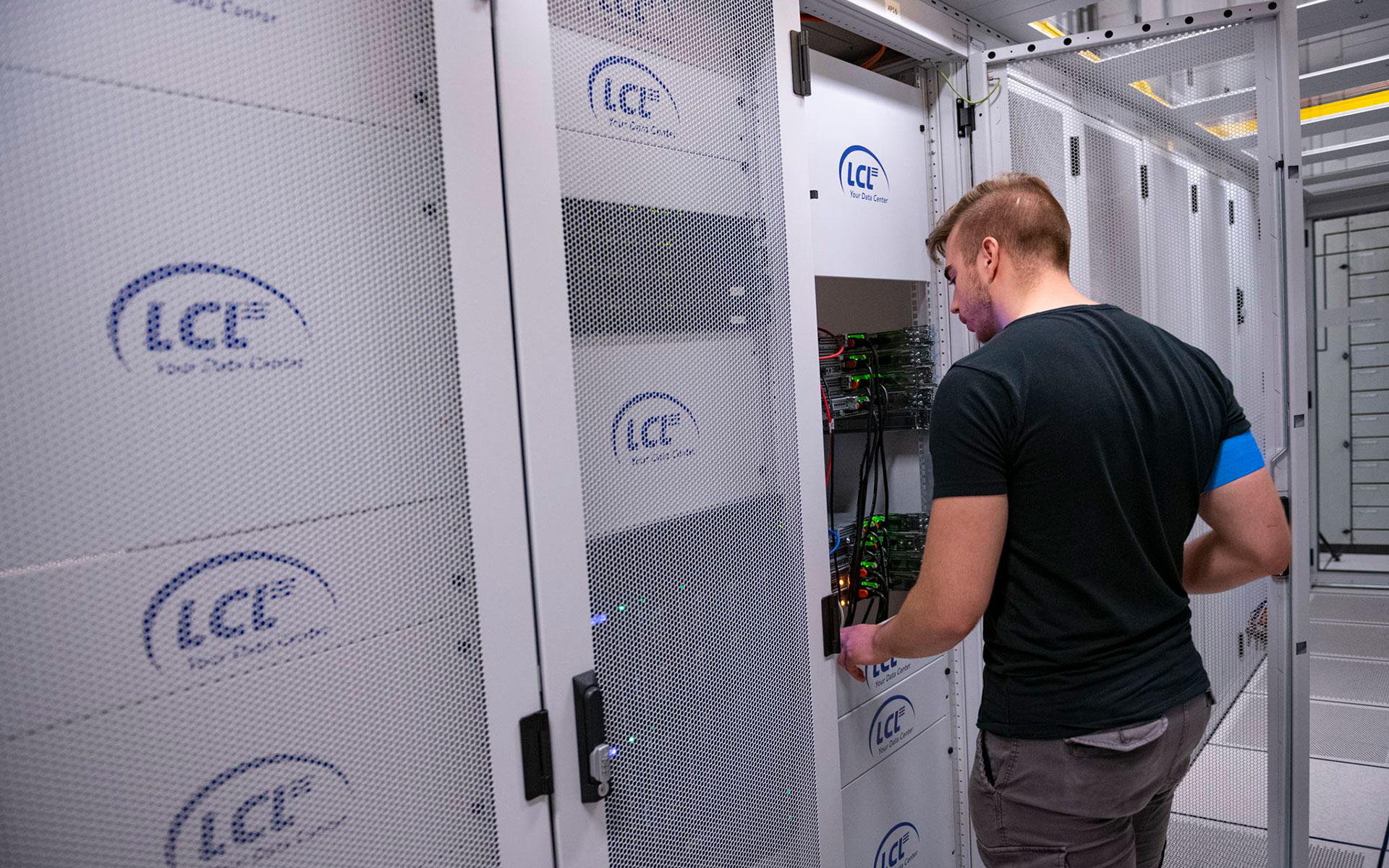
The data centre is perhaps the most invisible piece of real estate in our built environment. It has no iconic skyline presence, no public entrance and rarely attracts attention—at least until the internet slows down, cloud services fail or AI suddenly becomes part of everyday business.
Yet behind every email, video call and AI prompt lies physical infrastructure that has quietly become as essential as roads, ports and power grids.
For more than two decades, Laurens van Reijen, founder and managing director of LCL Data Centers, has been building precisely that infrastructure. Long before data sovereignty became a boardroom discussion and AI became a strategic priority for Europe, LCL was developing secure, resilient and highly specialised data centres across Belgium.
Today, the company finds itself at the intersection of some of the most important developments shaping the continent’s digital future. “People often forget that every digital service exists somewhere physically,” van Reijen says. “Every email, every cloud application, every AI model ultimately runs on servers inside a data centre.”
That simple observation explains why demand for digital infrastructure continues to accelerate. AI, cloud computing, cybersecurity and digital sovereignty are no longer separate trends. They all rely on the same foundation.
The infrastructure case
Demand
AI inference
Priority
Digital sovereignty
Foundation
Resilience by design
MORE THAN REAL ESTATE
To an outsider, a data centre may appear to be just another industrial building. In reality, van Reijen describes it as one of the most complex operational environments in real estate.
“Companies increasingly want a European alternative.” LCL does not own the servers housed inside its buildings. Instead, the company owns, develops and operates the critical infrastructure surrounding them: the buildings, technical installations, power supply, cooling systems and connectivity that allow customers to run mission-critical IT environments without interruption.
“Our customers entrust us with their most valuable digital assets,” he explains. “That trust has to be earned every single day.” Redundancy is therefore designed into every layer of the operation.
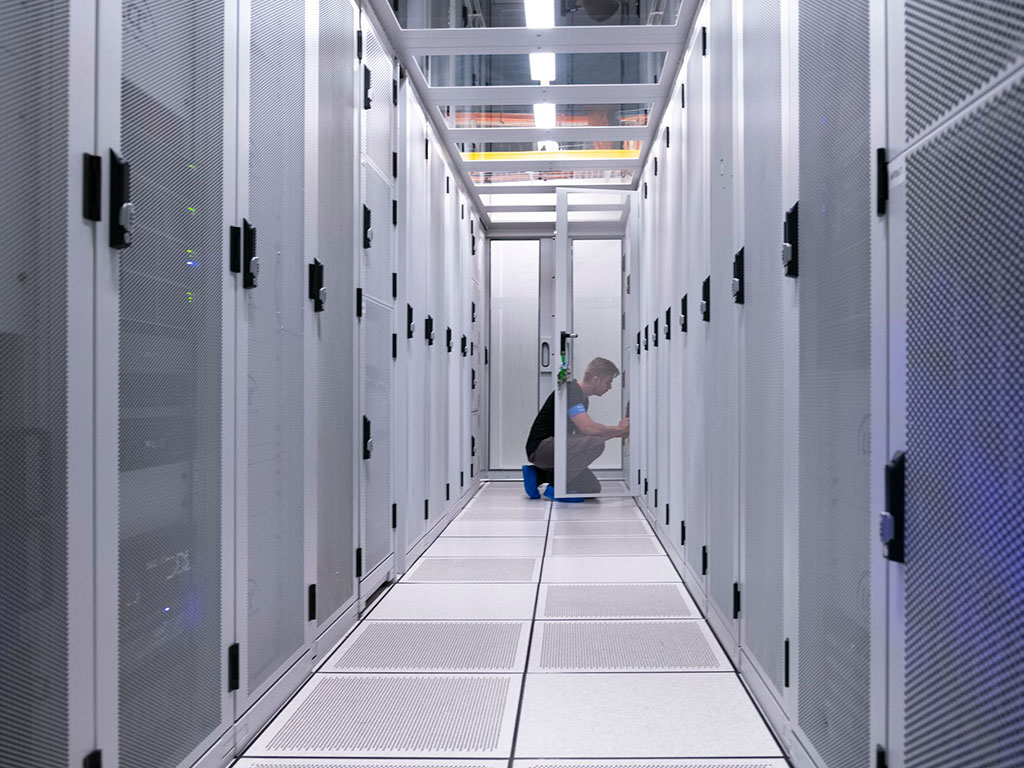
Multiple power supplies, battery systems, backup generators, diverse fibre routes and geographically separated locations ensure there is never a single point of failure. While each individual site is engineered for maximum resilience, customers replicate their own data across multiple locations, allowing operations to continue even in the unlikely event of a complete site outage.
That reliability requires continuous investment. LCL previously announced a €120 million programme, with €100 million allocated to expansions in Aalst and Diegem and a further €20 million reserved for sustainability measures. The programme illustrates the capital-intensive nature of the sector, but also the scale at which demand is evolving.
A MARKET DRIVEN BY AI—AND BY SOVEREIGNTY
Artificial intelligence has dramatically increased attention on data centres, but van Reijen believes Europe is only at the beginning of that evolution. The largest AI training clusters are currently being developed in countries such as Norway, Sweden and Finland, where energy is abundant, inexpensive and cooling conditions are favourable. Belgium, however, will play a different role.
“The future here lies primarily in AI inference,” he explains. “Once AI models have been trained, they need to be deployed close to users. That requires low latency, local infrastructure and secure environments.”
At the same time, geopolitical developments have pushed digital sovereignty to the top of many corporate agendas. Increasingly, organisations are asking where their data is stored, under which jurisdiction it falls and who ultimately controls access to it.
For LCL, this shift represents a structural growth driver rather than a temporary trend. “Companies increasingly want a European alternative,” says van Reijen. “Not because every workload must remain local, but because they want the option. Digital sovereignty is about maintaining strategic control.” Open-source AI models further reinforce that movement, allowing organisations to deploy powerful language models within their own secure environments instead of relying exclusively on hyperscale cloud providers.
Companies increasingly want a European alternative.
SUSTAINABILITY AS STRATEGY
Data centres are frequently criticised for their energy consumption. LCL deliberately approaches the discussion from a different angle. Rather than treating sustainability as a certification exercise, the company has embedded it into its long-term operating strategy. Renewable energy production, energy-efficient cooling, the replacement of refrigerant gases with a high climate impact, HVO100 renewable fuel for emergency generators and ambitious science-based climate targets all form part of its roadmap.
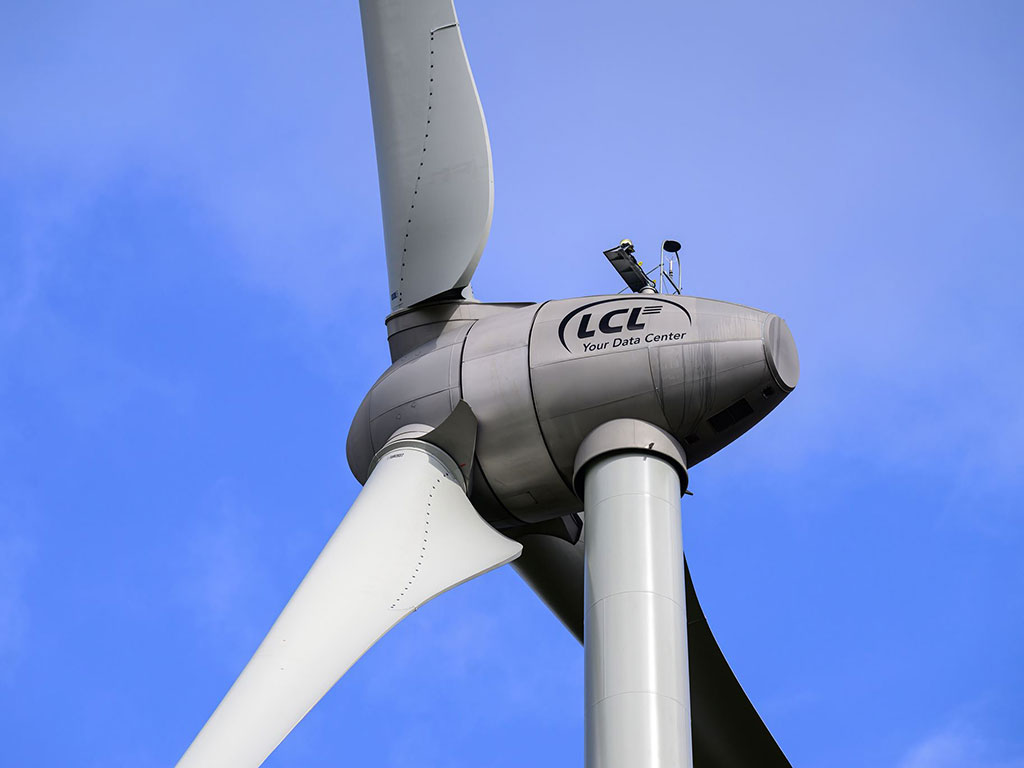
LCL makes that progress transparent through a dedicated sustainability platform and annual impact reporting structured around environmental, social and governance objectives. Its 2025 results include a 63.75% reduction in its carbon footprint compared with the 2020 baseline, 38.3% own renewable energy production and the exclusive purchase of green electricity. The company also operates three wind turbines and several large-scale solar installations.
For LCL, however, sustainability is not limited to energy figures. “Sustainability isn’t a box to tick,” the company emphasises. “It influences how we design buildings, how we work with local communities and how we prepare for the next twenty years of growth.”
That philosophy also shapes LCL’s voluntary reporting framework, which has been aligned with the principles of the EU Corporate Sustainability Reporting Directive, even though the company is not legally obliged to report at that level.
A SPECIALISED ASSET CLASS
Despite growing investor interest in data centres worldwide, van Reijen believes success depends on much more than capital. Building a data centre requires the right location, sufficient power capacity, extensive connectivity, specialised technical expertise and, perhaps most importantly, customer trust.
“Many people think you build a data centre and customers automatically come,” he says. “In reality, that’s only the beginning.” Each customer brings different operational requirements. Financial institutions prioritise compliance and cybersecurity. Telecom providers require maximum connectivity.
Other organisations focus on physical security, redundancy or sustainability. Every facility is therefore tailored to the specific needs of its occupants. That customer intimacy has become one of LCL’s defining strengths and one of the reasons the company has continued to grow steadily for nearly twenty-five years.
The barriers to entry remain considerable. Suitable land is scarce, access to sufficient electricity is increasingly difficult and the permitting and construction process can take years. Existing facilities must also be modernised while remaining fully operational, a task van Reijen considers even more complex than developing a new building.
BUILDING THE INVISIBLE BACKBONE
While much of the real estate sector focuses on offices, logistics or residential developments, digital infrastructure is quietly emerging as another strategic asset class. Unlike traditional buildings, however, data centres combine property, engineering and continuous operations in ways few organisations can replicate.
LCL deliberately positions itself not as a real estate company, but as a service provider with substantial assets on its balance sheet. Ownership of the land, buildings and technical infrastructure gives the company the control and long-term certainty its customers require.
As AI adoption accelerates, digital sovereignty becomes increasingly important and Europe’s digital economy continues to expand, the infrastructure supporting it will only become more critical.
For van Reijen, that future remains grounded in a remarkably simple mission. “Our role is to make sure society’s digital infrastructure simply keeps working,” he says. “If we do our job well, most people will never even notice we’re there.”
And perhaps that is the greatest compliment any critical infrastructure can receive.
If we do our job well, most people will never even notice we’re there.
SCULPTING THE INTANGIBLE
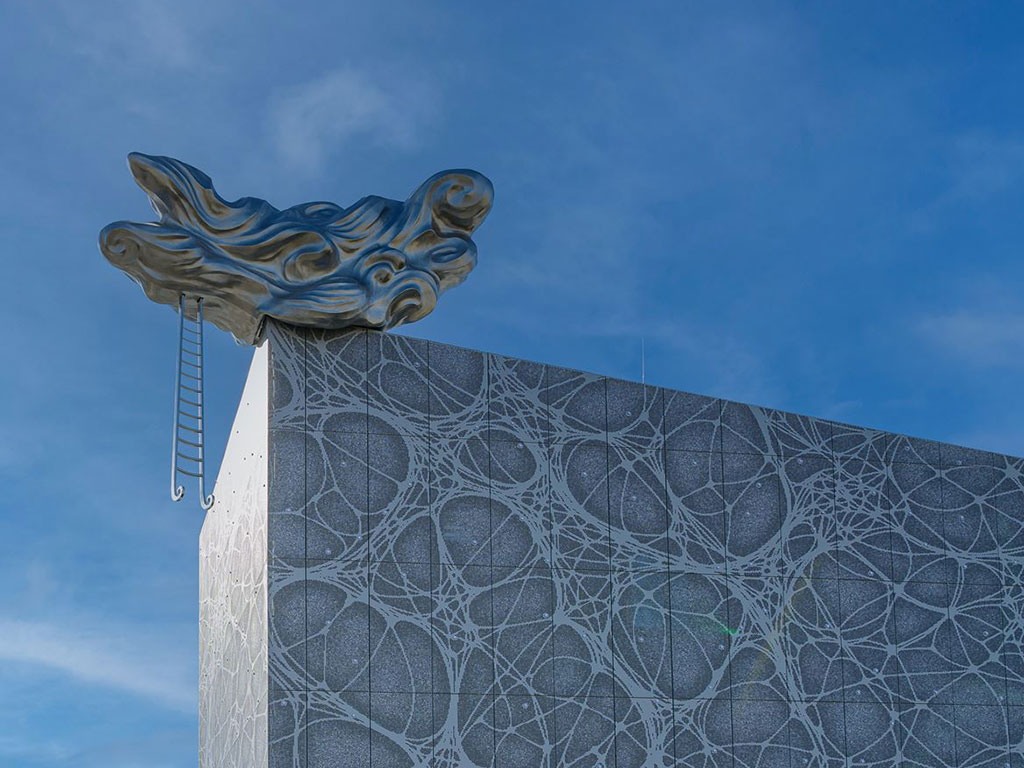
Luk Van Soom is a Belgian sculptor best known for his monumental works in public spaces. From his studio in Rijkevorsel, he gives physical form to the intangible: light, air, water, dreams and clouds. His sculptures combine traditional craftsmanship with contemporary materials and technology.
Van Soom represented Belgium at the Expo ‘92 in Seville and has since created more than fifty public artworks across Belgium and the Netherlands. Notable works include The Man from Atlantis in Brussels, his monumental lamp tree for Beaufort and In the Cloud above Brussels’ Marolles district. With The Cloud for LCL, he once again brings poetry, architecture and technology together, transforming the invisible digital cloud of the LCL data centre into a tangible work of art.