
Serge Hannecart is in the car when the conversation begins.
It is an image that almost fits his career too well: on the move, between projects, markets and countries. The Antwerp entrepreneur behind LIFE has spent more than three decades treating real estate as a profession shaped as much by timing as by imagination.
The LIFE approach
Timing
Move early
Ownership
Build to hold
Standard
Beauty matters
THE ART OF MOVING EARLY
Ask him what all those countries have taught him about people and places, and he does not answer with an abstract story about culture. Hannecart starts from the market. “We do not first look at what a culture needs,” he says. “We look at what people in that country need, and at the opportunities in that market.” It sounds pragmatic, but beneath that sentence lies a clear development philosophy: LIFE looks for markets where the need is visible, but has not yet been fully translated into prices, valuations or the instincts of traditional players.
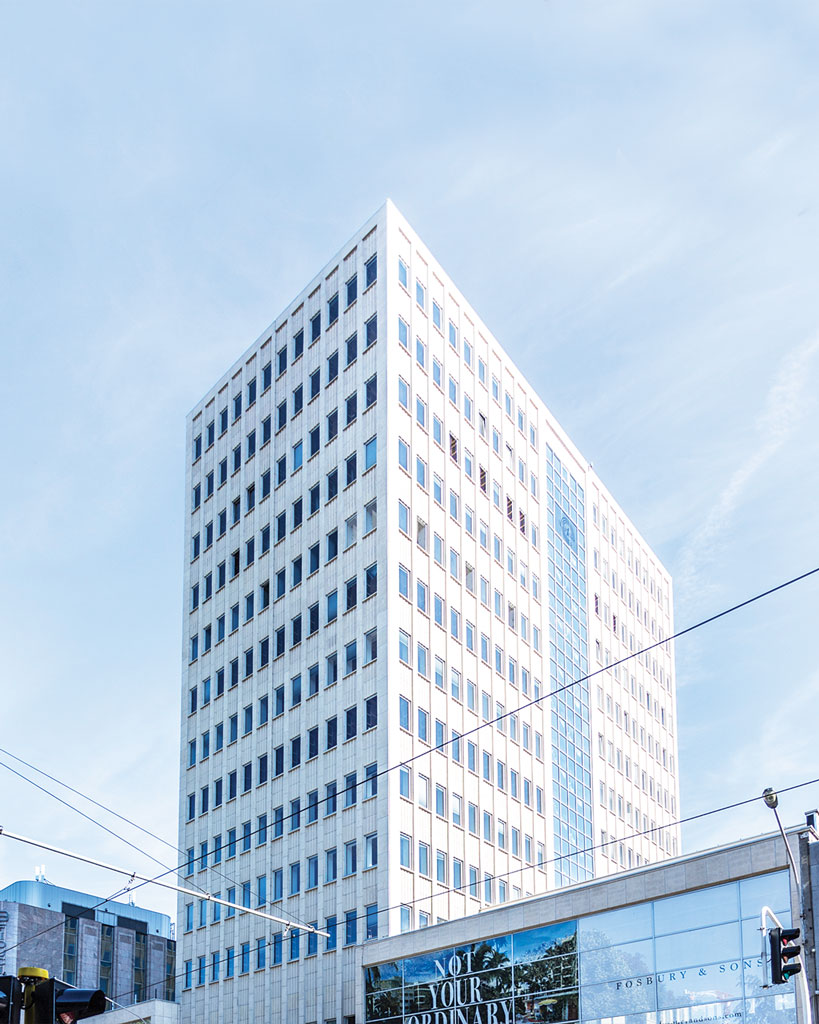
That explains why Italy is now firmly on the radar. In the Netherlands, according to Hannecart, student housing has already attracted many players and margins have become thinner. In Italy, he still sees room. Not because it is easy. Permits, construction costs and local ways of working remain real challenges. But for LIFE, that is often where things begin. “We like being the first mover,” he says.
He has experienced that before. In Spain and the Netherlands, LIFE’s early student housing transactions ran up against valuations that could not keep pace with the purchase price. The reference points were outdated; the market was looking backwards. But once a transaction had been completed, it became the new reference itself. That is how real estate sometimes works: arrive too early, and you still have to prove your thesis. Arrive at the right time, and the market may move behind you.
FROM COWORKING TO URBAN ECOSYSTEMS
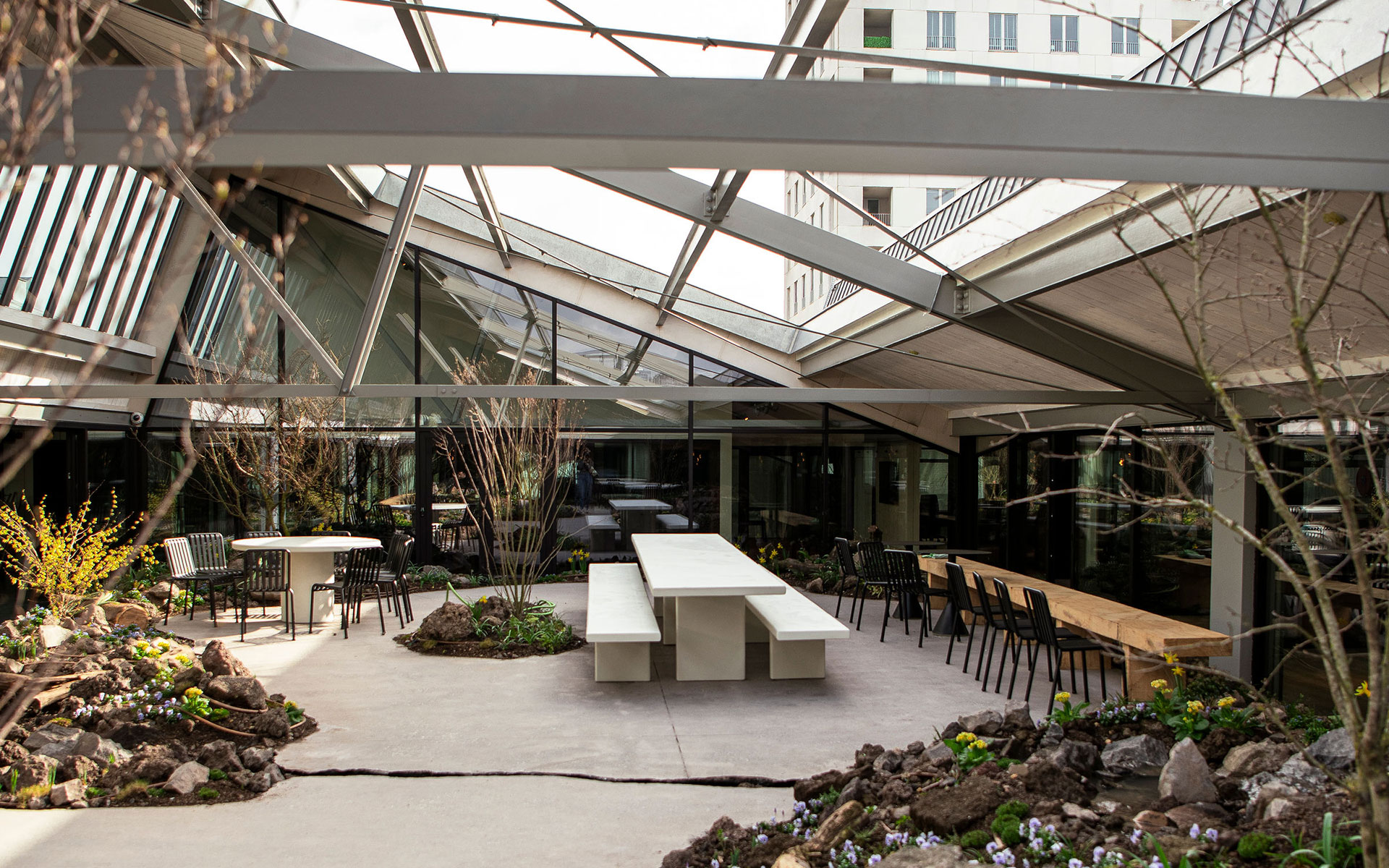
Hannecart speaks about Fosbury without regret, but also without nostalgic blindness. Covid hit the coworking model hard. “All our offices were empty,” he says. “We had twelve projects underway and had to cancel some of them.” Yet the balance remains positive. Fosbury gave LIFE a strong image and access to office buildings that could later be repositioned. Today, he would use coworking differently: no longer as a stand-alone risk, but as an anchor or service within larger developments.
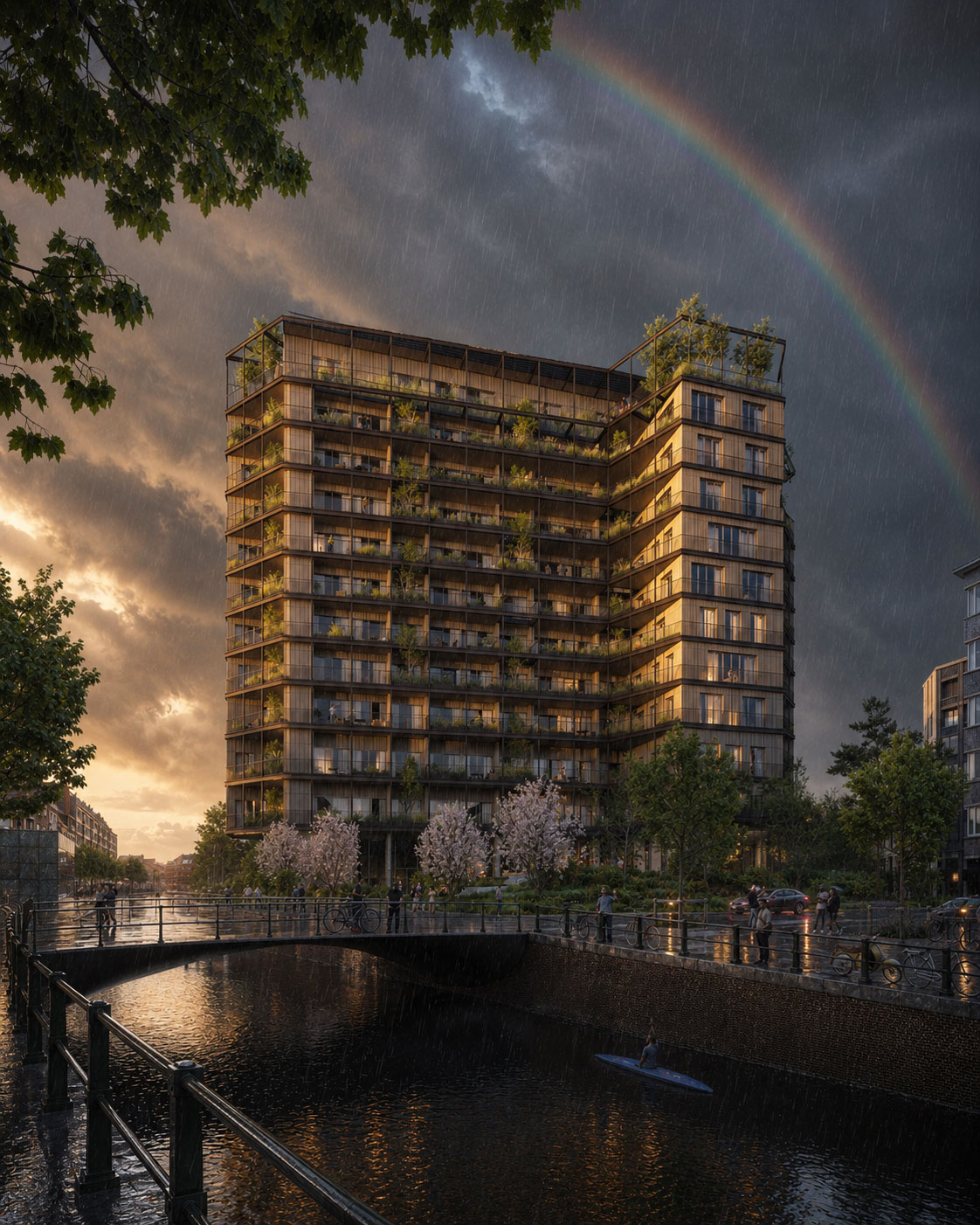
The Portus site in Ghent, the former Belgacom site acquired by LIFE, is a useful example. The high-end apartments are, in Hannecart’s words, meant for end users rather than institutional buyers chasing yield. But the site also combines office and coworking space, hospitality, wellness, fitness and a large public or semi-public city garden. In that mix, coworking is no longer the business model on its own. It becomes part of a larger urban ecosystem.
BUILDING TO HOLD
The same pragmatic evolution is visible in his view on ownership. LIFE wants to build a residential portfolio of 10,000 units over the coming years. Not as a fund, Hannecart stresses, but in direct ownership. Student rooms, apartments, studios or co-living units can all be part of that ambition, as long as they are residential. And anyone who owns 10,000 units must also manage them directly.
That ambition does not mean abandoning development and sales. LIFE will continue to sell projects to free up liquidity. But alongside the classic developer model, a second layer is emerging: holding more assets, building recurring income and becoming less dependent on the next exit. The entry of the Cigrang family as a shareholder fits that story. Hannecart sees in them a partner with an intergenerational view.
The focus is not this year’s profit, but how a company can continue across generations. The 10,000 units are therefore more than a buffer; they are a way to survive crises without immediately having to let people go.
“You have to be able to share in order to multiply.”
THE SLOW BUSINESS OF BUILDING
Still, Hannecart remains first and foremost a developer, with the restlessness that comes with it. Real estate is slow, he says. You buy land, apply for permits, face objections, build, sell and deliver. A career contains only a limited number of major project cycles. “A developer can really only do five, six or seven projects one after the other,” he says. “And if you want to do more than one, you need cash.”
He laughs when he says he sometimes regrets not becoming a baker. Bread is baked at night, sold during the day, and the next day the cycle starts again. In real estate, money is tied up for years in land, permits, concrete, risk and ambition. But that is also what makes the profession meaningful. A loaf of bread is gone tomorrow. A building remains for fifty or a hundred years.
WHY BEAUTY MATTERS
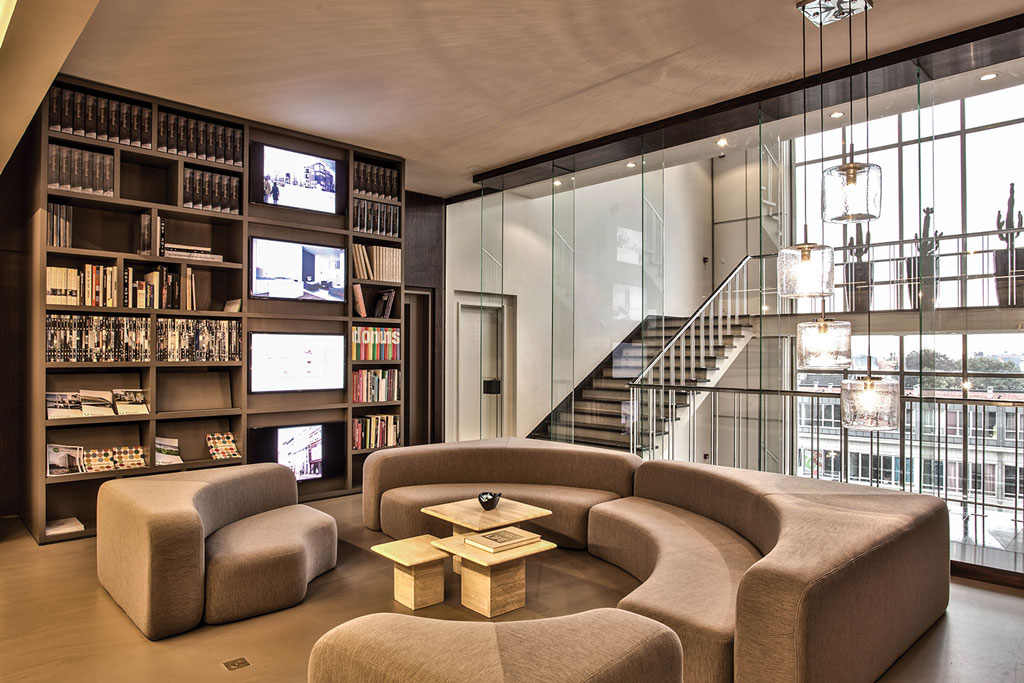
For Hannecart, that is where the responsibility of the developer lies. Not in maximising every short-term return, but in making better places. Beauty is not decoration. It is a way to make life more pleasant. “People who are surrounded by beauty can also have a more pleasant life,” he says. Good places may cost money in the short term. But over time, that value comes back: in reputation, trust and projects that would otherwise never have come to the table.
His answer to the question of legacy is strikingly modest. Perhaps one project will one day be listed as a monument, he jokes. Perhaps not. “In 150 years, everyone will have forgotten me, and that is fine.” What remains are the places: the buildings, gardens, streets, living formats and daily routines they make possible.
People who are surrounded by beauty can also have a more pleasant life.
WHAT REMAINS
In a market where ownership is becoming less affordable and renting is becoming more important, Hannecart does not see the developer disappearing. Funds will want to own more, and in some cases develop more themselves. But someone still has to imagine, drive, finance, permit and deliver the buildings.
That may be the essence of his story. Serge Hannecart does not build from certainty, but from a sharp sense of opportunity. Not opportunism as a synonym for quick profit, but as a discipline: seeing chances where others see complications, and then building the organisation capable of seizing them. With local teams, partners, capital, beauty and patience. Real estate is slow. But precisely because of that, it can keep speaking for a long time.
HOW ARE SERGE HANNECART AND CEUSTERS CONNECTED?
LIFE, short for Living in Funky Environments, and Futurn both have multiple connections with CEUSTERS across advisory, transactional and property management activities. With LIFE, one of the clearest examples is WAW in Antwerp, the former Water-Link headquarters. CEUSTERS advised LIFE on the acquisition of the iconic building, which was later repositioned and rebranded as WAW. In a subsequent phase, CEUSTERS also advised LIFE on the strategy of dividing the property into individual floors and selling them separately, an approach that proved highly successful. CEUSTERS is also involved through the property management of WAT T.
With Futurn, the relationship goes back to the company’s early years, when CEUSTERS was involved in the sale of the former Barco site on the Noordlaan in Kortrijk. More recently, CEUSTERS has been involved in several Futurn projects, including the sale of SME units in various developments across Belgium. At Re|Core Hasselt, CEUSTERS is involved in a 5,500 m² project for De Watergroep, scheduled for delivery in Q1 2027. Another project for Cobaltbox at Re|Core Hasselt is currently in the permitting phase and is therefore not yet public.
CEUSTERS is also active on the property management and syndic side for a number of related assets, including WestGate in Groot-Bijgaarden. In that sense, the relationship extends beyond individual transactions: CEUSTERS acts as adviser, broker, property manager and sector partner across several projects and platforms.