
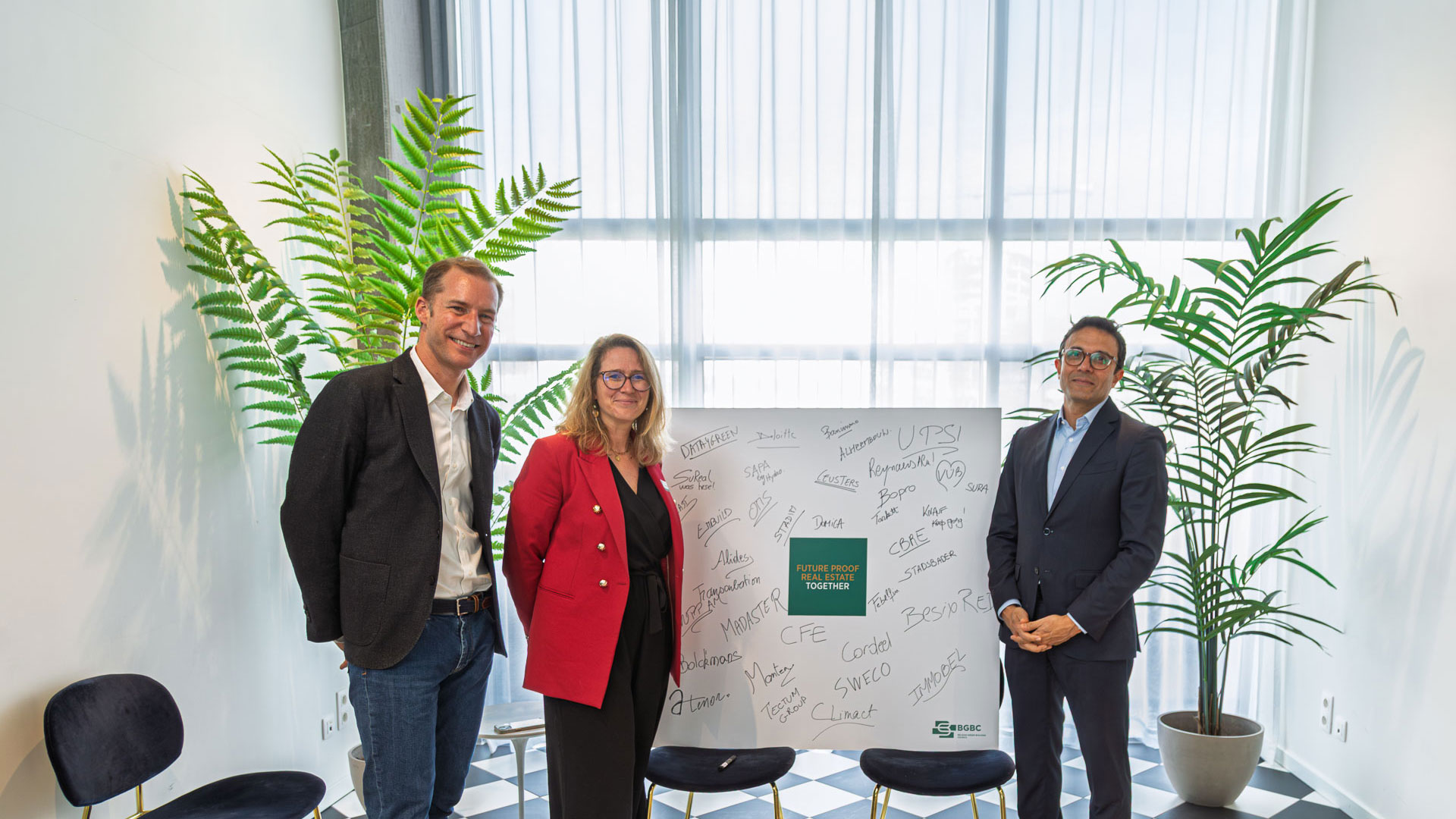
HOW THE BELGIAN GREEN BUILDING COUNCIL WANTS TO TURN COMPLEXITY INTO COLLECTIVE ACTION
Sustainability in real estate is no longer a matter of ambition alone. It has become a question of regulation, finance, risk, performance and long-term value. Yet in Belgium, moving from intention to implementation is often more complex than it should be. Different regional rules, fragmented interpretations, overlapping standards and sector-specific approaches make it difficult for market players to know which path to follow.
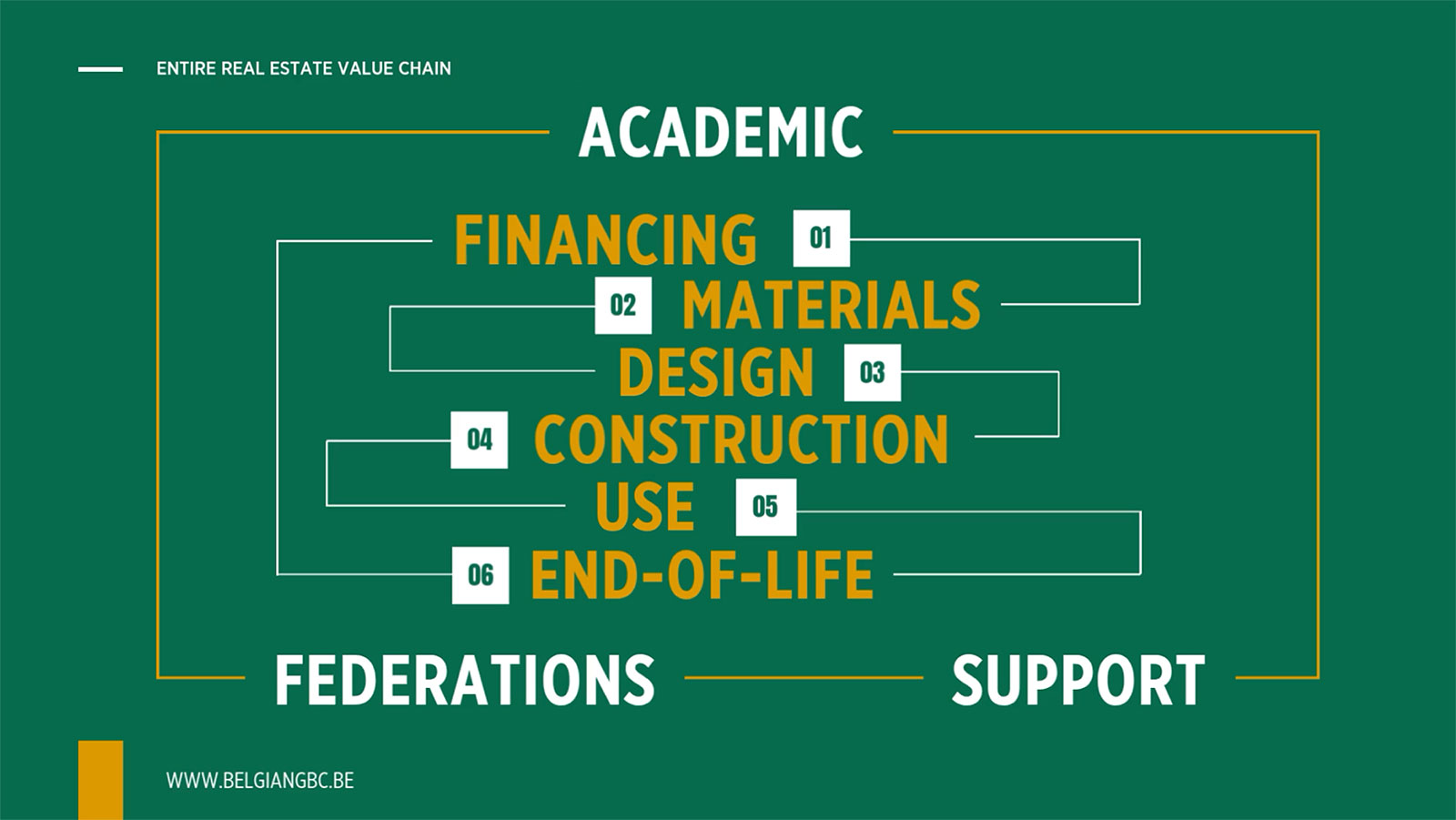
That is precisely where the Belgian Green Building Council wants to make a difference. Founded to bring more coherence, credibility and practical alignment to the sustainable building agenda, the BGBC positions itself as a neutral, multi-stakeholder platform. Its mission is not to represent one profession, one region or one interest group, but to connect the full ecosystem: developers, owners, property managers, contractors, architects, engineers, material producers, financiers, academics and public authorities.
For Gilles Vanvolsem, Managing Director of the BGBC, the need for such an organisation was clear from the start. “Belgium suffers from fragmentation, ” he explains. “There is fragmentation between the regions, because regulation is regionalised. But there is also fragmentation between professions, because many federations approach the topic from their own specific perspective.”
That fragmentation is not just administrative. It affects the speed, cost and effectiveness of the transition. If Belgium wants to accelerate the decarbonisation and future-proofing of its real estate stock, the sector needs a common language.
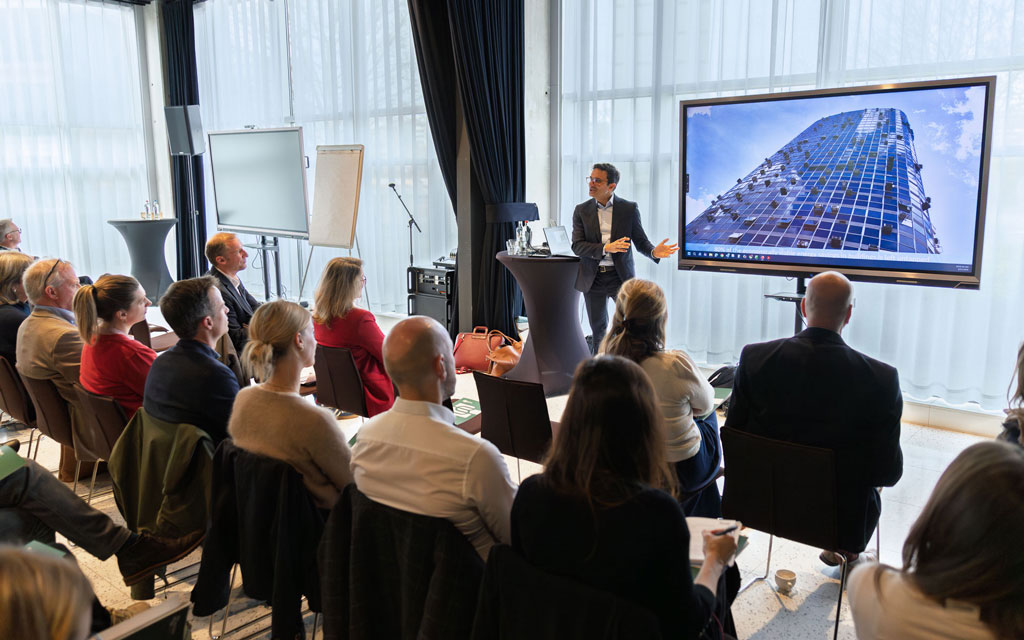
CONNECTING FINANCE, CONSTRUCTION AND ACADEMIA
One of the key ambitions of BGBC is to bring together worlds that do not always speak to each other naturally. Sustainable real estate is often seen through the lens of construction, design or technical performance.
But according to Vanvolsem, the financial sector must be just as present at the table. “The financing of the transition is essential, ” he says. “Public budgets are limited, and the subsidy model alone will not be enough. The European Green Deal clearly invites financial institutions to play a role in redirecting capital towards sustainable activities.”
This is why BGBC wants to create a stronger link between the construction and real estate sectors on one side, and the financial sector on the other. Banks, investors and insurers will increasingly influence which buildings receive capital, which assets remain insurable and which projects can move forward.
The academic world is another important partner. Belgium has strong universities and research centres working on sustainability, materials, energy and urban development. Yet their rhythm and language often differ from those of the market.
BGBC aims to shorten that distance. The result is a platform that combines market experience, scientific input and intersectoral neutrality. “Our advantage is that we do not defend one specific sector,” Vanvolsem explains. “When we speak to policymakers, we can already present a position that has gone through a first level of compromise between different parts of the market, supported by academic expertise.”
BELGIUM: STRONG INNOVATION, DIFFICULT EXECUTION
How does Belgium perform in the European sustainability landscape? According to Vanvolsem, the country has no reason to be embarrassed. “We tend to be humble, ” he says.
“But Belgium has many strong innovation centres, competent universities and companies that are already doing interesting work in sustainable building. We are probably in the upper part of the ranking.”
“We have difficulty building one common and coherent vision, because everything is systematically divided by three. ” The frustration lies elsewhere: efficiency. Belgium’s regional structure makes it difficult to create one shared vision. The same real estate issue can be approached differently in Flanders, Brussels and Wallonia. For companies active across the three regions, this creates unnecessary complexity.
“We have difficulty building one common and coherent vision, because everything is systematically divided by three, ” Vanvolsem says. A clear example is the Energy Performance Certificate. With the implementation of new European directives, all regions need to review their systems. For BGBC, this could have been an opportunity to harmonise methods. In practice, however, political autonomy remains a strong factor.
On other topics, cooperation is more promising. Vanvolsem points to Totem, the tool used to calculate the environmental impact of building materials, where the three regions are working together. BGBC is involved in discussions to ensure that future regulation remains pragmatic and genuinely supports sustainable building, rather than becoming an additional administrative burden.
When every actor knows exactly what they have to do, that will be a real accomplishment.
FROM POLICY COMPLEXITY TO PRACTICAL TOOLS
For CEUSTERS, one of the reasons to become a founding partner of BGBC is the conviction that solutions for sustainable real estate must come from the field. Regulations and frameworks matter, but they only create impact when they are translated into workable tools for owners, managers, developers and users.
BGBC shares that approach. Its task forces focus strongly on developing tools “by the market, for the market”. Two examples illustrate this pragmatic philosophy. The first is a guidance document on the European taxonomy. The taxonomy is essential for investors, banks and real estate companies, but it remains open to interpretation.
BGBC brought together consultants, auditors, architects, developers and other experts to create a shared reading of the framework. The second is the Climate Adaptive Building tool, recently published by BGBC. It helps assess climate-related risks for buildings.
All tools developed by BGBC are made publicly available. This opensource philosophy is central to the organisation’s mission. “Our goal is to advance the sustainable building transition in Belgium, ” says Vanvolsem.
“Not only for our members, but for the entire market.”
WHY FOUNDING PARTNERS MATTER
CEUSTERS joined BGBC as a founding partner because it believes that real estate advisers and property managers have a practical role to play in the transition. Sustainable real estate is not only designed at the drawing table. It is also maintained, operated, leased, valued and improved over time.
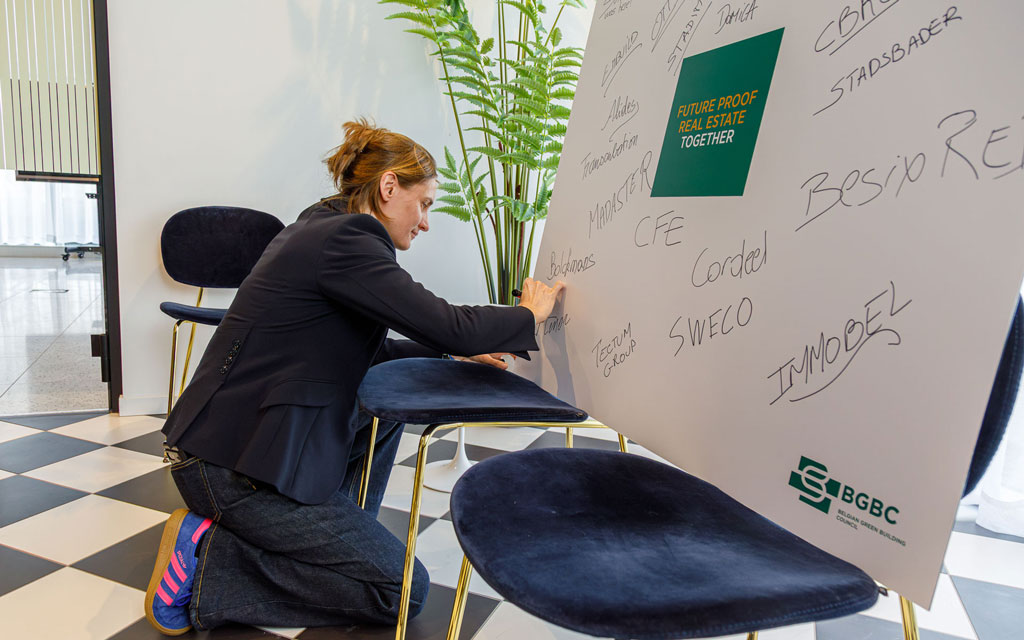
The founding partners were crucial in giving BGBC credibility from the start. The organisation quickly grew from around 30 founding partners to approximately 100 members. “That first group created a strong momentum, ” Vanvolsem says.
“It allowed us to gain recognition in the market and move forward quickly.” For BGBC, the role of partners such as CEUSTERS goes beyond financial support. Their experience in property management, valuation, brokerage and day-to-day asset operations helps ground the debate in reality.
This is particularly important because sustainability is often discussed at a high strategic level, while implementation happens building by building.
THE PROPERTY MANAGER AS A SOURCE OF REALITY
In the sustainable transition, property managers are sometimes overlooked. Developers design buildings. Contractors build them. Investors finance them. But property managers see how buildings actually perform once they are occupied.
For Vanvolsem, that makes their role fundamental. “There is often a gap between design and operation, ” he says. “A building can be designed to meet all the technical requirements on paper, but once it is in use, it may be too expensive to operate, too complex or simply not functioning as expected.”
This operational feedback is essential. Property managers see which technologies work, which systems are overdesigned, where maintenance becomes difficult and how users react to the building. “In many cases, it is the property manager who invites the market to simplify technical systems,” Vanvolsem adds. That message is highly relevant for CEUSTERS. As a property manager, the company is not only responsible for maintaining assets, but also for helping owners make better long-term decisions. Sustainability must therefore be approached not as a checklist, but as part of the full asset lifecycle.
VALUATION, RISK AND THE BUSINESS CASE FOR SUSTAINABILITY
Another field where sustainability is becoming more tangible is valuation. BGBC recently launched a task force on the integration of sustainable criteria into valuation models, with participation from CEUSTERS.
The question is clear: how do sustainable investments translate into value? There is still a perception that a sustainable building is simply more expensive. But Vanvolsem argues that the real question is whether those investments reduce risk, improve resilience, extend useful life or protect future income.
In that sense, sustainability increasingly becomes part of the business case. ESG creates value at several levels. For some companies, it is about risk management. For others, it creates commercial opportunities, especially for European material producers and circular economy solutions. It also plays a role in attracting and retaining talent, as younger generations increasingly look for purpose in their work.
But the most decisive factor may be finance. “The strategy of the European Green Deal is to redirect financial flows towards sustainable activities, ” Vanvolsem explains. “Companies that are ready to demonstrate their sustainability performance will have easier access to financing. Those that are not ready may find financing more difficult.”
A similar evolution can be expected in insurance. Buildings that do not properly manage climate risks may become harder or more expensive to insure.
THE NEXT BOTTLENECK: ELECTRICITY AND INFRASTRUCTURE
Sustainability is also creating new constraints. Electrification is a good example. As logistics operators, industrial users and companies electrify their fleets and operations, the capacity of the electricity grid becomes a strategic real estate issue.
According to Vanvolsem, logistics developers are already facing difficulties in finding locations with enough capacity to charge electric trucks. Solar panels and batteries can help, but they do not always provide enough power for full fleet electrification. “They still depend on the grid, ” he says. “And grid operators need to keep up with the pace.”
For real estate, this means that access to energy capacity may become as important as access to roads, public transport or labour markets. Buildings will need to manage peak consumption more intelligently. Developers may need to negotiate grid reinforcement. In dense urban areas, even finding space for additional high-voltage cabins can become a challenge.
The sustainable transition is therefore not only about buildings. It is about infrastructure, neighbourhoods and systems.
FROM REPORTING TO VALUE CREATION
ESG has entered companies through reporting, but it cannot remain an administrative exercise. The challenge is to turn data, targets and obligations into better decisions. Vanvolsem sees ESG entering companies at different levels: risk management, commercial strategy, talent, finance and operations.
The companies that succeed will be those that move beyond reporting and integrate ESG into the way they manage assets, allocate capital and plan for the future. For CEUSTERS, this aligns with its broader role as a real estate adviser.
Whether through property management, valuation, brokerage or asset support, the company can help clients interpret ESG not only as compliance, but as a driver of long-term value.
A SUCCESSFUL FUTURE: NO MORE NEED FOR AWARENESS-RAISING
When asked what success would look like five years from now, Vanvolsem gives a simple answer. BGBC will have succeeded when awareness-raising is no longer necessary. “When every actor knows exactly what they have to do, that will be a real accomplishment, ” he says.
He also hopes Belgium will become internationally recognised as an inspiring country for sustainable building. Today, many Belgian initiatives already exist, but they are not always visible enough. BGBC has started highlighting member initiatives through short videos on LinkedIn and its website, showing that the transition is already underway.
Vanvolsem even imagines a future in which international visitors come to Belgium to discover exemplary sustainable buildings. “Like company safaris, ” he says with a smile. “But for sustainable real estate.”
It is a light image, but a serious ambition. Belgium may be complex, fragmented and sometimes inefficient. But it also has the expertise, creativity and market maturity to become a reference.
The task now is to connect the dots. And that is exactly what BGBC was created to do.