
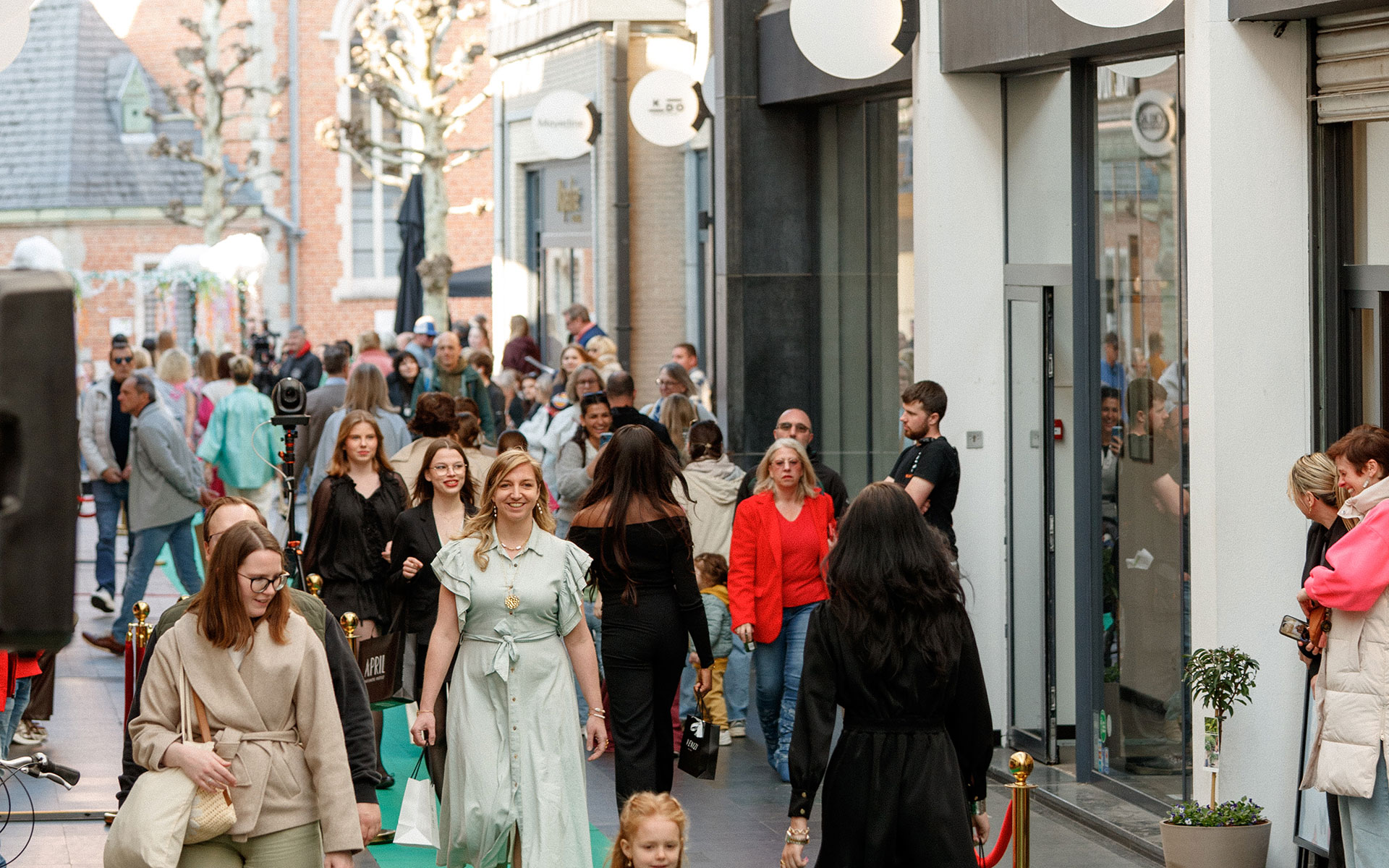
In a market where many investors look for predictable income, limited effort and clean spreadsheets, Hans De Neef looks for something else first: the feeling of a place.
Yield matters. So does risk. But for De Neef, real estate becomes truly interesting when there is more to do than simply collect rent.
The project needs a soul, a location, and a tension between what it is today and what it could become tomorrow. That philosophy is visible in Dok Noord in Ghent, one of his best-known projects. It also explains his recent acquisition of the Pieter Van Aelst gallery in Aalst, a covered retail passage and inner-city square in the historic heart of the city.
“I walk around and I need to feel something.” For CEUSTERS, which has been involved in the management of Pieter Van Aelst for many years, the transaction marks a new chapter for a complex but promising urban retail asset. “I walk around and I need to feel something,” says De Neef. “I need to think: this is great. And when I walk through Pieter Van Aelst, I still have that feeling.”
The proposition
Place
Pieter Van Aelst, Aalst
Focus
Retail and F&B
Ambition
Passage to meeting place
A RETAIL ASSET IN THE BEST PART OF AALST
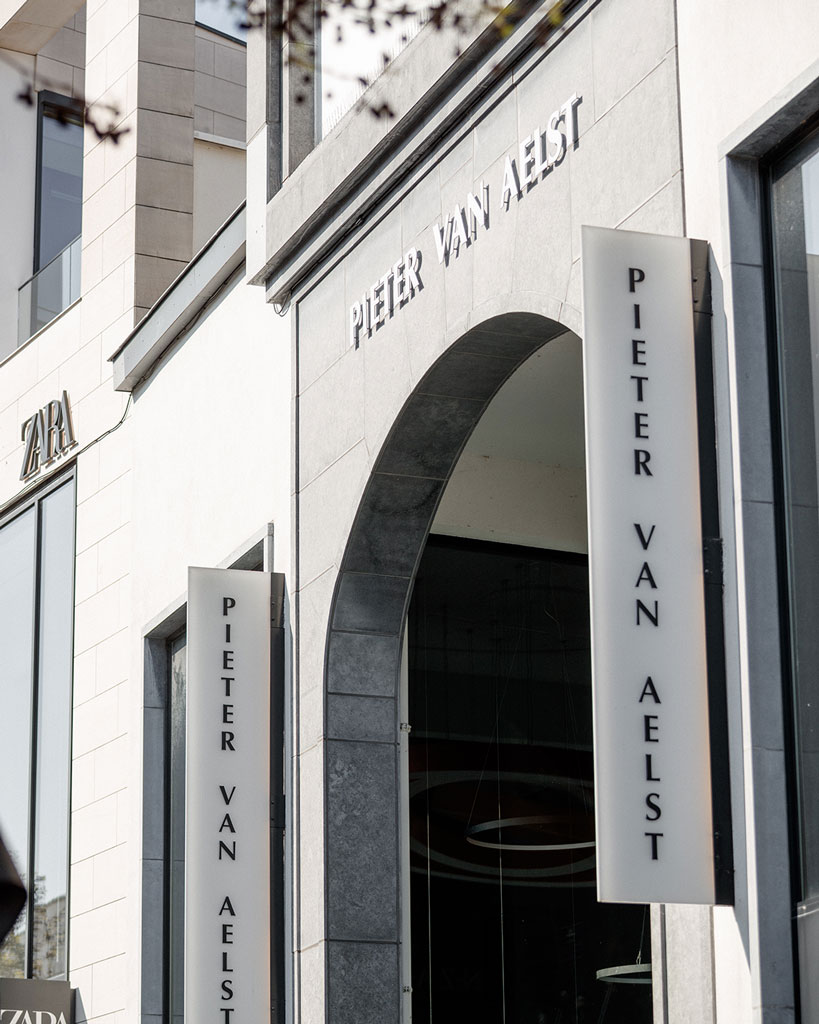
Pieter Van Aelst consists of around 25 retail units and approximately 5,000 square metres of built space. Its strength lies in its position: the gallery connects two of the strongest retail streets in Aalst, the Nieuwstraat and the Kattestraat.
“This is the best part of Aalst,” De Neef says. “If it does not work there, then Aalst has a structural problem. But I do not believe that is the case.”
Contrary to the perception that the site was struggling, vacancy is limited. Only a few units remain empty, and ongoing discussions with potential tenants should reduce that number further. Compared to the wider vacancy in many city centres, Pieter Van Aelst performs better than expected.
The asset is too small for major institutional players and too operationally demanding for many private investors. It requires active involvement, tenant dialogue and a willingness to work on the atmosphere of the place.
That is exactly what appeals to De Neef. “This is not a peripheral retail box where cars arrive and everything is empty again at six o’clock,” he explains. “This is inner-city real estate. You have to do more with it. But that is also where the added value lies.”
This is inner-city real estate. You have to do more with it. But that is also where the added value lies.
MORE THAN YIELD
The acquisition made financial sense. De Neef had already looked at the asset several years earlier, when the asking price was significantly higher. Today, the situation is better: stronger tenants, longer lease commitments and a lower acquisition price.
But the decision was not driven by numbers alone. Many investors, De Neef argues, focus almost exclusively on rent, risk and tenant balance sheets. His approach is different. He looks at the experience of the place, the urban context and the potential to improve it.
“The return is good, otherwise I would not have done it,” he says. “But for me, it is also about the fact that this is the heart of the core retail area.”
For De Neef, city-centre retail assets cannot survive as passive investments. They need owners who understand their local role and are willing to curate the mix, improve the public experience and keep the place alive.
REDISCOVERING THE ORIGINAL CHARACTER
One of the first ambitions for Pieter Van Aelst is to bring back part of its original architectural identity. Over time, elements of the gallery’s steel structure were covered up.
De Neef wants to reverse some of those interventions and reveal the structure again. “The original columns were wrapped in plasterboard,” he says. “Part of that has already been opened up. Once the structure becomes visible again, the gallery immediately regains part of its character.”
Greenery is another priority. Planters have already been introduced around the square, but De Neef wants to go further, with more greenery integrated into the façades and public space.
The site combines a covered gallery with an open square around a chapel. That mix of protection and openness gives Pieter Van Aelst a distinctive urban quality.
“It is an iconic place,” he says. “You cannot compare it with anything else in Aalst.”
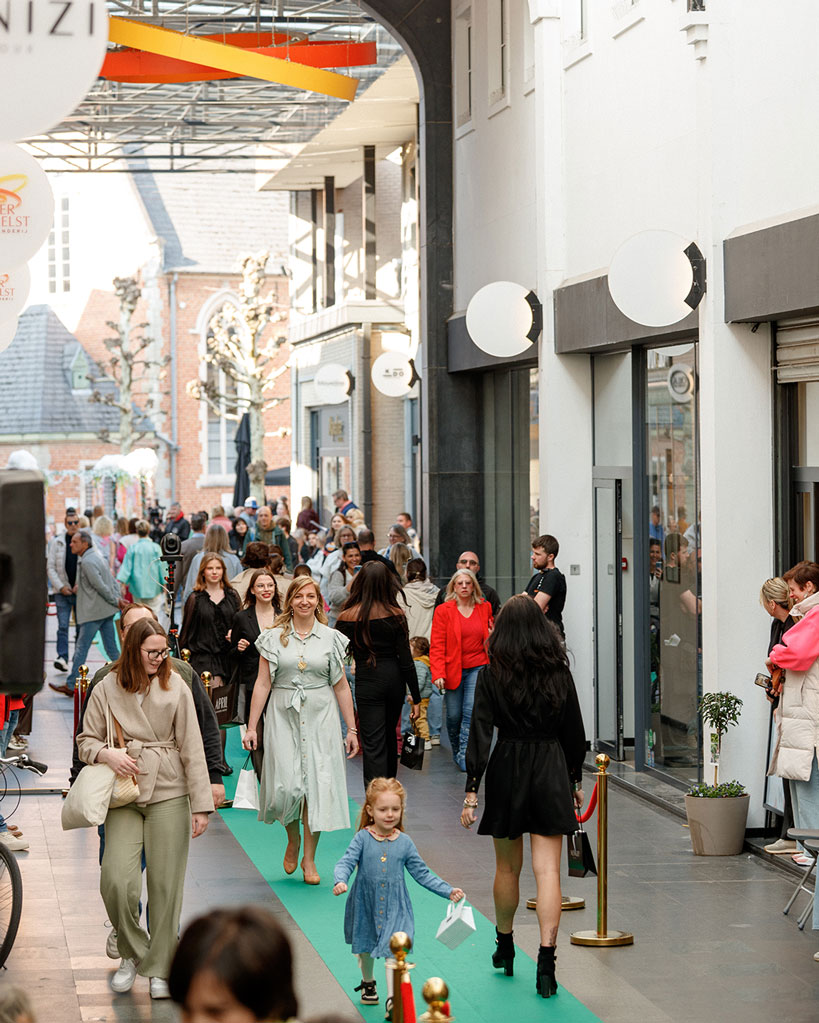
FROM PASSAGE TO MEETING PLACE
The challenge is to make people want to pass through Pieter Van Aelst, but also to stay. De Neef sees the potential of the square as a small urban stage. It does not need expensive programming to become more active. Simple, original initiatives can already make a difference: small events, local activities, perhaps even dance classes or moments that create life without feeling artificial. “What happens there should not be standard,” he says. “People no longer believe in stereotypical animation. You have to understand the place in detail.”
That attention to detail also applies to footfall. De Neef plans to install sensors to better understand visitor flows: who passes through, when they come, where they come from and how they move through the site.
He has already observed one important shift himself: schoolchildren and young people increasingly pass through Pieter Van Aelst on their way through the city. “You need to know these things,” he says. “If you do not understand the flows, you cannot make it work.”
CURATING THE RIGHT MIX
Pieter Van Aelst is not a leisure destination like Dok Noord. It is too central, too urban and too fine-grained for that. The focus remains retail and F&B, supported by the existing apartments and offices above the commercial ground floor.
But within that retail function, De Neef is selective. The goal is not simply to fill units as quickly as possible with whoever pays the highest rent. The tenant mix must make sense for Aalst, for the gallery and for the surrounding streets.
He gives the example of choosing to support an existing cosmetics tenant rather than allowing the site to become too dominated by textile retail.
The mix has to stay balanced. “It needs to be complementary,” he explains. “You have to look at what Aalst needs, what attracts people and what strengthens the whole.”
That does not mean being unrealistic. A retail owner also needs occupancy and income. But De Neef believes long-term value depends on the quality of the mix, not only on the rent per square metre.
You have to look at what Aalst needs, what attracts people and what strengthens the whole.
LESSONS FROM DOK NOORD
Dok Noord remains the clearest expression of De Neef’s long-term approach. He bought the former industrial site in Ghent in 2000, when it was still zoned for industrial use. The first renovations started under industrial and leisure functions.
In 2006, the urban planning framework evolved, allowing broader urban functions. The first buildings were delivered in 2009, followed later by the retail centre in 2016. It was never a quick development. It unfolded in phases, with constant attention to use, character and context.
For De Neef, the success of Dok Noord lies not only in the programme, but in the fact that it retained a strong identity. The project combines retail, leisure, offices, housing and public space, but above all it created a new piece of city.
“I always try to make something beautiful,” he says. “Something that makes people feel good. Something that adds value to the street.”
THE ROLE OF CEUSTERS
In Pieter Van Aelst, CEUSTERS continues to play an important role as property manager. For De Neef, good management is crucial, especially in an asset with many tenants and a public character. The challenge is to keep service levels high while ensuring that costs remain proportionate for smaller retailers.
“CEUSTERS manages it well,” De Neef says. “Now we have to look at where things can be made more efficient, so that the cost structure remains healthy for the tenants.”
This is where property management becomes strategic. It is no longer only about maintenance or administration. It is about understanding the owner’s vision, supporting tenants, monitoring costs and helping the asset perform better over time.
“I always try to make something beautiful.”
INNER-CITY RETAIL STILL HAS A FUTURE
The broader retail market remains challenging, especially in medium-sized cities. Vacancy, changing consumer behaviour and competition from peripheral retail and e-commerce have all reshaped the landscape.
Yet De Neef does not believe that city-centre retail is finished. On the contrary, he believes the best locations can still work — provided they are actively managed and emotionally relevant.
Aalst has strong streets, good F&B, an evolving visitor pattern and a central role in its region. Pieter Van Aelst sits exactly at the intersection of that potential.
The opportunity is to make it once again a place where people naturally pass through, meet, shop and spend time. For De Neef, that requires more than investment.
It requires curiosity, taste, local knowledge and a willingness to be involved. “You have to want to do it,” he concludes. “That is the difference. Some investors just see a property. I see a place.”